
It is an automated system for monitoring the status of machines, equipment, workplaces or processes in production.
-
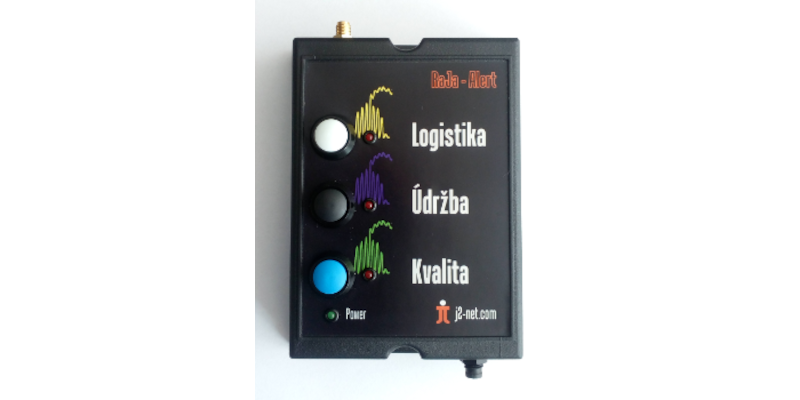 Terminal Alert
 -
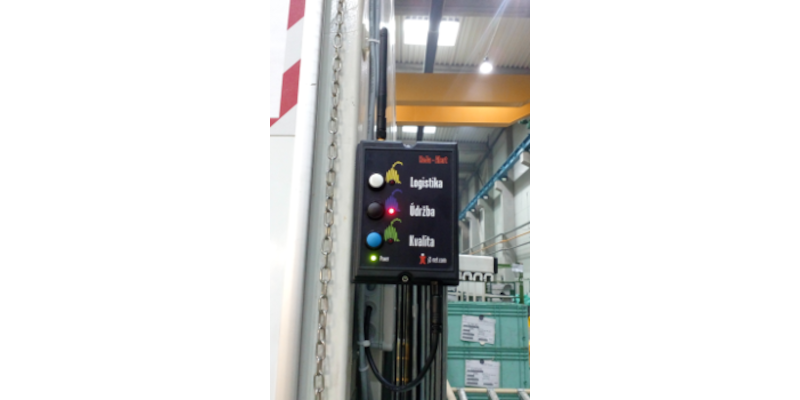 Application of terminal in production
 -
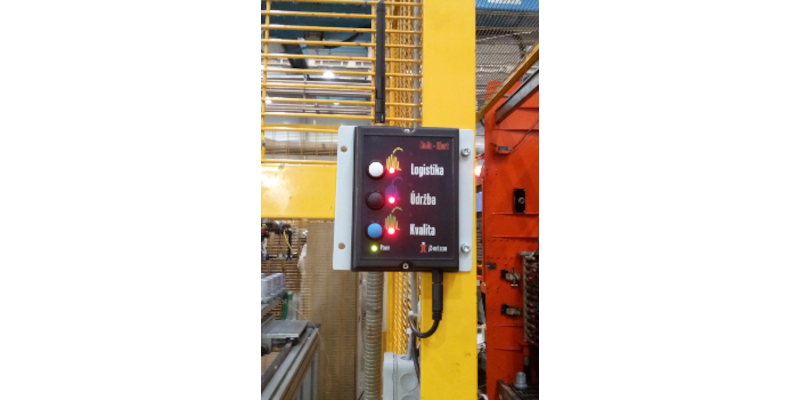 Application of terminal in production
 -
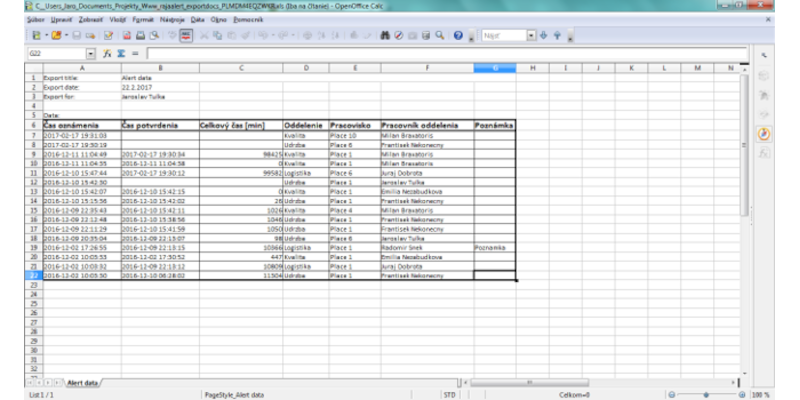 Export of data to Excelu
 -
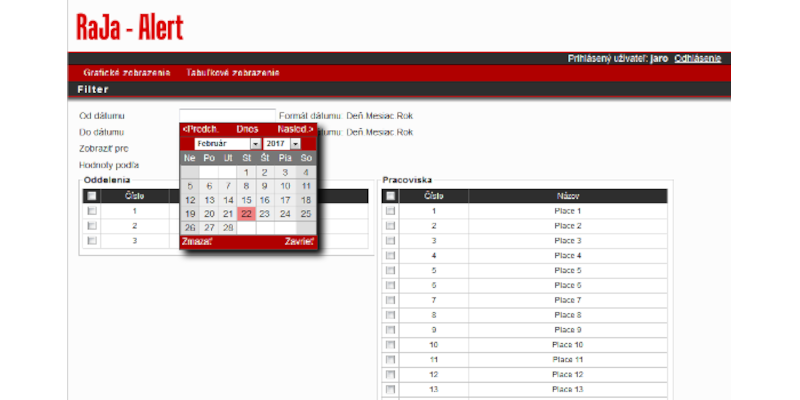 Control Software
 -
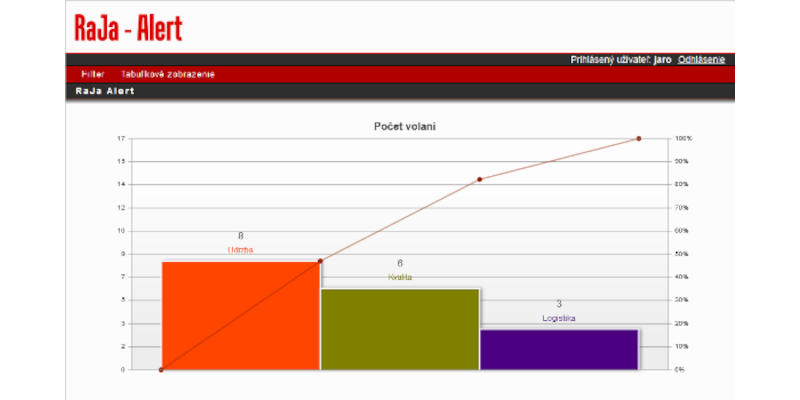 Graphical display of data
 -
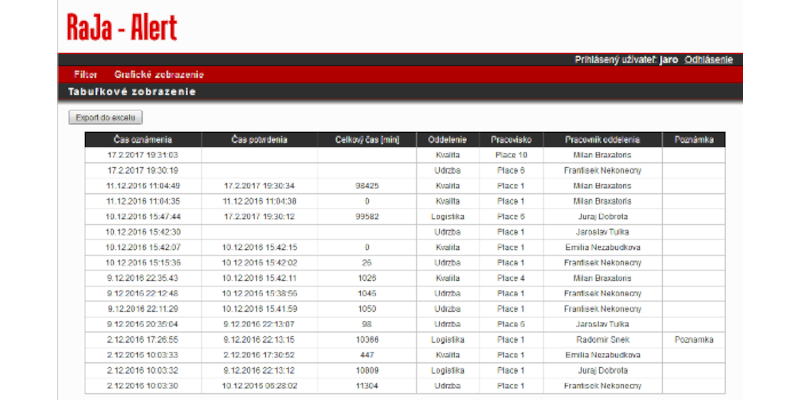 Tabular display of data
System Description
The system consists of three parts:- control,
- communication,
- signaling.
1. Control part:
- Collects, stores and processes data from signaling devices.
- It includes a web server, database server and real-time server.
- It runs an application for monitoring the current status and setting system parameters.
- It comes standard with a 7” TFT touch screen.
2. Communication part:
- Ensures communication between signaling terminals and the server.
- Sends and receives SMS messages.
3. Signaling part:
- Is a device located directly on the machine, equipment or in production.
- Its task is to collect data locally from the machine or after operator intervention and send it to the control part.
- It can be user-accessible devices such as buttons, RFID chips, TFT displays. For automatic data collection, it can be physical quantity sensors, timers, digital inputs, etc.
Methods of communication between control, communication part and signaling devices.
- Ethernet.
- Wireless technology.
- GSM.
Visualization is done in the form of a web server, so it is not necessary to install programs on client computers.
Saved data can be:
- displayed in graphic or tabular form
- exported to files of various formats such as CSV, PDF, XML
- filtered by date, groups...
- connected to the attendance system.
Real deployment of the notification system
Monitoring operator messages.
It is a wireless system that collects operator messages at individual workplaces. By using the system, we gain an overview of the failure rate, performance and reliability of the machine during full operation. The system relieves the relevant employee from solving problems that are not within his competence. It makes maintenance, quality and logistics in the production process more efficient.
Each workplace is equipped with a signaling device with three buttons. Each button represents one group of messages for a given department:- Logistics
- Maintenance
- Quality
Principle of operation:
- When the machine or workplace needs maintenance, the operator presses and holds the Maintenance button.
- A message about the need for maintenance intervention at the given workplace is activated, which is sent to the communication module.
- The main unit processes the data and sends an SMS or e-mail to the responsible employee.
- After the intervention, the message is canceled by pressing the appropriate button again. < li>The time of cancellation of the message is entered into the system.
The same procedure can be used to activate messages for other groups. All reports are stored on a database server.
The stored data can be further displayed and processed:
- In graphical form (Pareto diagram for workplaces or departments), where the number of calls or response time are taken into account.
- In tabular form.
- Data can be exported to CSV, XML, PDF files.